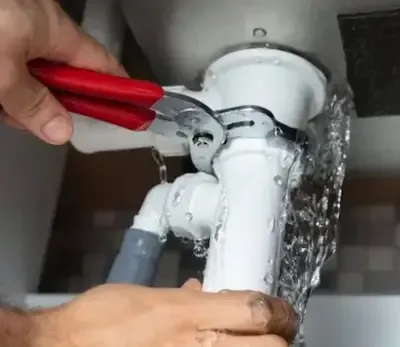
Burst Copper Pipe Repair in Older Pickerington Homes
Older homes in Pickerington carry a lot of character — and a lot of copper pipe. The subdivisions built throughout the 1960s, 1970s, and 1980s along routes like Hill Road and Refugee Road were plumbed almost exclusively with copper, which was the gold standard at the time. Decades later, that same copper is showing its age. When a burst happens inside a wall or under a slab in a home that's 40 to 60 years old, the repair isn't just about the break itself. It's about understanding why the pipe failed in the first place and what that means for the rest of the system.
Why Copper Pipes in Older Pickerington Homes Begin to Fail
Copper doesn't rust, but it does corrode. In central Ohio, the chemistry of municipal water has shifted over the decades, and older copper supply lines that were installed before those changes weren't designed to handle elevated chloramine levels or pH swings. The result is a slow thinning of the pipe wall from the inside out — a process called pitting corrosion. You won't see it happening, but one day a pinhole appears, then a small drip, and eventually a full split under pressure.
There are a few other contributing factors specific to this region and era of construction:
- Thin-wall Type M copper was commonly used in residential construction during this period and offers less corrosion resistance than Type L or Type K
- Flux residue left inside joints from original soldering can accelerate corrosion at fittings over time
- Water velocity erosion at elbows and tee fittings wears the pipe wall thin from repeated turbulence
- Galvanic corrosion where copper meets older steel or galvanized fittings creates an electrochemical reaction that degrades both metals
- Freeze-thaw cycles in uninsulated sections, particularly in crawl spaces or exterior walls, can stress weakened pipe to the point of splitting
Any one of these alone can eventually cause a failure. When several combine in a single section of pipe, the timeline shortens considerably.
How a Burst Copper Pipe Typically Presents in Older Construction
The failure mode matters because it tells a plumber a lot about the underlying condition of the system. A clean split along the length of the pipe typically points to freeze damage — water expanded inside a section that had no room to move. A pinhole cluster along a straight run usually indicates pitting corrosion from water chemistry. A failure right at a soldered fitting often suggests flux contamination or galvanic action at a dissimilar metal joint.
In homes built before 1985 in areas like Pickerington's older neighborhoods off Diley Road or near the original village center, it's common for a plumber to open a wall for one burst and find two or three more sections showing similar thinning. This is why a thorough inspection of the adjacent piping matters as much as the repair itself. Fixing only the visible break in a compromised run often leads to another call within months.
What the Repair Process Actually Involves
Burst copper pipe repair in an older home is rarely just a cut-and-splice job. The process typically follows several stages once a plumber has isolated and confirmed the failure location.
First, the water supply is shut off at the main and the damaged section is drained. In older Pickerington homes, this step can surface a secondary problem — corroded shutoff valves that won't fully close. If the main or secondary valves are compromised, they may need to be replaced before the pipe repair even begins.
Once the line is isolated, the plumber cuts out the failed section and inspects the adjacent pipe for wall thickness. In cases of widespread corrosion, the recommendation often shifts from patching to replacing the full run. A copper-to-copper repair using new Type L pipe and lead-free solder is standard, though in some situations — particularly in tight spaces or around existing insulation — push-fit fittings like SharkBite provide a reliable alternative that doesn't require open flame near finished materials.
If the burst occurred inside a finished wall or ceiling, access is part of the labor equation. Some plumbers will make a controlled cut for access; others use flexible repiping methods that allow a new line to be routed with minimal drywall removal. The right approach depends on the pipe location and what else is in the wall cavity.
For a comprehensive look at what to do in the immediate aftermath of a pipe failure, our winter burst pipe walkthrough covers the emergency steps in detail.
When Partial Repair Isn't Enough
There's a practical decision point in every older-home pipe repair: fix the section or repipe the run. If a pressure test of the surrounding copper shows consistent wall thinning or multiple pinhole sites, a targeted repair extends the life of a compromised system by only a few years at most. In that case, replacing the full run from supply manifold to fixture — or even whole-home repiping with PEX — becomes the more cost-effective solution over a five-year window.
This conversation happens regularly in Pickerington homes built in the 1970s and early 1980s. The copper in those houses has done its job for 40 to 50 years, but at a certain point the system as a whole reaches the end of its reliable service life. A single burst is often the moment homeowners realize the copper has been quietly failing for years.
What to Expect from a Local Plumber on This Type of Job
A qualified plumber working on burst copper pipe repair in an older Pickerington home should walk you through the condition of the surrounding pipe before finalizing a repair scope. They should be able to explain whether they're doing a targeted fix or a run replacement, what material they're using for the repair, and what a pressure test afterward will confirm. If they can't answer those questions plainly, that's worth noting.
Response time matters here too. A burst pipe isn't a scheduled appointment — water damage compounds quickly, and the longer a line stays pressurized against a failed section, the more material gets saturated. Local plumbers familiar with Pickerington's older housing stock along corridors like Diley and Hill Road will recognize the pipe configurations common to this era and can work more efficiently than someone who hasn't seen these systems before.
If you're dealing with a burst right now or want an assessment of aging copper in your home, Burst Pipe Repair is available from local plumbers who work in Pickerington and the surrounding Fairfield County area.
