Outdoor Gas Line Repair for Pickerington Homeowners
Pickerington sits at the edge of two counties, and most of its neighborhoods were built during the suburban expansion of the 1990s and 2000s. That means a large number of homes have underground gas lines running from the meter to grills, fire pits, pool heaters, and detached garages — infrastructure that was installed during construction and then quietly forgotten under two decades of lawn growth, landscaping projects, and fence installations. When something goes wrong with those lines, homeowners are often surprised by how complicated the repair process turns out to be.
Why Summer Is the Riskiest Season for Underground Gas Lines
Every spring and summer, the phones at plumbing and gas service companies across central Ohio light up for the same reason: a homeowner, a landscaper, or a fence contractor hit something underground. In Pickerington, this happens with particular regularity because so many backyards have buried supply lines serving outdoor amenities. A spade going into the ground for a garden bed, a fence post auger boring a hole for a new privacy fence, or even aggressive aeration equipment can pierce or dislodge a buried gas line.
The danger isn't always immediate and obvious. A small nick in a line may produce a slow leak that accumulates in low-lying areas, under deck structures, or inside a detached garage before anyone notices. Natural gas is odorized with mercaptan precisely because it's otherwise undetectable, but in outdoor settings that smell can disperse quickly in wind, meaning a leak can persist for hours before you catch a whiff. If you suspect your outdoor gas line has been disturbed — even if you can't smell anything — treat it as an emergency and call before doing any further digging.
The County Line Complication Pickerington Homeowners Face
Pickerington is one of the few municipalities in central Ohio that straddles a county boundary. The city sits across both Fairfield County and Franklin County, and the neighborhood your home is in determines which county's building department has jurisdiction over your permit. For gas line work — which always requires a permit and inspection in Ohio — this matters.
Franklin County homeowners go through the Franklin County Building Services department, while those on the Fairfield County side work with the Fairfield County Building Inspection office. The city of Pickerington has its own zoning authority, but the gas line permit itself typically runs through whichever county has jurisdiction over your parcel. When you hire a licensed gas line contractor, they should be familiar with both processes. If you're talking to a company that doesn't know which county your home is in before pulling a permit, that's a red flag worth noting.
What Outdoor Gas Line Repair Actually Involves
Repairing an outdoor or underground gas line isn't a simple patch job. The scope of work depends on where the damage is, how long the line runs, what material the pipe is made from, and what it serves. Older lines in Pickerington neighborhoods may be made from black iron pipe, while most lines installed in the past twenty years are CSST — corrugated stainless steel tubing — or yellow polyethylene for the underground sections.
For underground repairs, the contractor needs to locate and expose the damaged section, assess whether a section splice is appropriate or whether the entire run needs replacement, pressure test the repaired line before backfilling, and then schedule a county inspection before the trench is closed. Skipping any step — especially the inspection — can create liability issues if you ever sell the home or make an insurance claim related to the line.
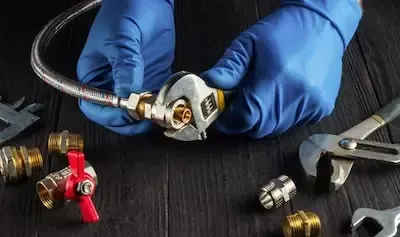
For Gas Line Repair work on above-ground connections — the flex connectors behind your grill, the riser feeding your outdoor kitchen, or the shutoff valve at your fire pit — the repair process is faster but still requires a licensed technician. Ohio does not allow homeowners to perform their own gas line repairs. This isn't arbitrary; gas connections that appear fine visually can have microfractures, improper thread sealant, or inadequate support that only a trained eye catches.
Ohio 811 and Dig Safe Requirements Before Any Ground Work
Before any digging begins on your property — by a contractor or by you — Ohio law requires an 811 call. This is the Ohio Utilities Protection Service, and they coordinate with Columbia Gas and other utilities to locate and mark underground lines before excavation. The locate request must be submitted at least three business days before digging starts.
Here's what many Pickerington homeowners don't realize: the 811 system marks utility-owned infrastructure, meaning the lines from the street to your meter. The gas line from your meter into your yard, and everything attached to it, is your responsibility. Those private lines won't be marked by 811. This is why knowing where your private gas lines run — and having them mapped before any landscaping project — is important. If you've had outdoor gas appliances installed, dig out those old permits and as-built diagrams before anyone picks up a shovel.
Signs Your Outdoor Gas Line Needs Attention Now
Not every outdoor gas line problem comes from an obvious strike. Some develop gradually from corrosion, ground movement, or connection fatigue. Watch for these indicators:
- Dead or dying grass in a line pattern — A strip of brown lawn following the path of your buried line can indicate a slow underground leak. Natural gas displaces oxygen in soil, killing roots.
- Persistent sulfur smell near outdoor appliances — Even faint, intermittent odors near your grill connection or fire pit should be investigated immediately.
- Appliances that won't light or have weak flames — Pressure loss from a leak upstream will affect performance at the fixture.
- Visible corrosion or damage at above-ground connections — Rust, green oxidation, or physical damage to fittings are signs the line needs professional evaluation.
- A hissing sound near buried lines — In quiet conditions, an active leak can sometimes be heard directly over the pipe location.
For more context on what to do when you first suspect a gas problem, review the gas smell emergency steps before taking any action around the affected area.
Working With a Licensed Contractor in Pickerington
Ohio requires gas line work to be performed by a licensed plumber or HVAC contractor with a gas piping endorsement. In a municipality like Pickerington that spans two counties, your contractor should be comfortable working with both the Franklin County and Fairfield County permit offices. Ask directly whether they've pulled gas line permits in your specific county before.
Timelines matter too. County inspections in Fairfield and Franklin can run anywhere from a few days to a couple of weeks depending on the season and current permit volume. Summer months — when the bulk of outdoor gas line damage occurs — are also when inspection queues are longest. A contractor who communicates clearly about that timeline and keeps your trench safely cordoned off while waiting for inspection is worth more than one who promises unrealistic turnaround.
Outdoor gas line issues in Pickerington are common, fixable, and manageable when handled correctly. The key is acting promptly, verifying your contractor's licensing and county familiarity, and not letting impatience push anyone to skip the permit and inspection process that protects your home and your family long after the trench is closed.
