Water Heater Leaking in Pickerington: Shut-Off Steps
If your water heater is leaking in Pickerington, OH, shut off the cold water inlet valve first, then cut power at the breaker (electric) or turn the gas valve to the pilot position (gas). This stops new water from entering and eliminates ignition risk. Do not attempt repairs while the tank is pressurized or energized. Once isolated, place towels or a bucket to contain standing water, then call a licensed Pickerington plumber to assess whether the unit needs a repair or full replacement. Acting within the first 10 minutes limits floor damage and prevents mold from starting in your basement or utility closet.
Step 1: Find the Cold Water Inlet Valve and Close It
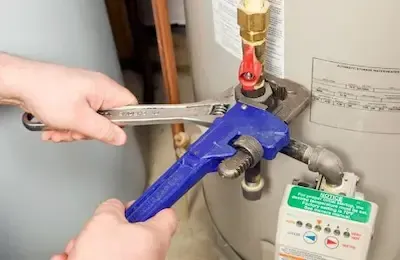
The cold water inlet valve sits on top of your water heater on the line that feeds cold water into the tank. Turn it clockwise until it stops. On most Pickerington homes built in the last two decades, this is a ball valve that requires only a quarter-turn. Older homes near the Sycamore Creek corridor may have gate valves that require multiple full rotations. Once closed, no additional water enters the tank, and the leak volume drops immediately. If you cannot reach the inlet valve safely because of pooling water near electrical outlets, go straight to Step 2 first.
Step 2: Cut the Power Supply to the Unit
For an electric water heater, go to your main breaker panel and flip the double-pole breaker labeled "Water Heater" to the off position. Most Pickerington homes have 240-volt dedicated circuits for tank heaters, so confirm both legs are off. For a gas water heater, locate the gas control valve on the front of the unit and rotate the knob from the "On" position to "Pilot." Do not turn it to "Off" yet — doing so can create a purge situation that requires a technician to relight safely. Eliminating the heat source prevents the tank from building pressure against a compromised fitting or seam.
Step 3: Identify Where the Leak Is Coming From
Dry the outside of the tank with a rag and watch for 60 seconds. Common leak points include the temperature and pressure relief valve (T&P valve) on the side, the drain valve near the bottom, inlet and outlet fittings on top, and the tank body itself. A T&P valve dripping means pressure or temperature is too high — do not plug it. A drain valve leak is often a simple washer fix. A leak from the tank body seam means the unit has failed internally and Water Heater Repair or full replacement is necessary. Tankless homeowners should check the inlet filter housing and the pressure relief port specifically.
Step 4: Contain Standing Water to Prevent Structural Damage
Even a slow drip from a 50-gallon tank can release hundreds of gallons over several hours. If your water heater is in a basement utility room — common in the Violet Township neighborhoods and newer Pickerington subdivisions off Hill Road — standing water can wick into drywall and subflooring within 20 minutes. Use towels, buckets, or a wet-dry vacuum to remove water from the immediate area. Open the floor drain if one is present. Do not use a standard household vacuum. If water has reached finished flooring or drywall, photograph the damage before cleanup for insurance documentation.
Step 5: Open a Hot Water Faucet to Relieve Tank Pressure
With the inlet valve closed and power off, open the nearest hot water faucet — a bathtub or utility sink works well. This relieves residual pressure inside the tank and slows any active leak at fittings or the T&P valve. You will hear air and water sputter briefly, then flow slow to a trickle as the pressure equalizes. Leave the faucet open until a plumber arrives. This step is especially relevant for tankless units; for context on how tankless systems fail differently, read about tankless failure context for new builds to understand why pressure symptoms differ from tank-style failures.
Step 6: Call a Licensed Plumber in Pickerington Before Attempting DIY Repairs
Ohio plumbing code requires permitted work for water heater replacement in Fairfield County. A licensed plumber serving the Pickerington area will assess whether the leak is repairable — a faulty anode rod fitting or drain valve — or whether the tank has corroded past the point of safe repair. Water heaters over 10 years old with body leaks are rarely worth repairing. Provide the technician with the brand, model number (usually on a label near the top of the tank), and a description of where you saw the water originating. This speeds diagnosis and means fewer return trips.
What Not to Do When Your Water Heater Is Leaking
Do not plug or cap the T&P valve under any circumstance — it is a safety device that prevents tank rupture. Do not leave the power on while the tank is losing water, as heating elements can burn out within minutes when exposed. Do not ignore a minor drip thinking it will resolve on its own; corrosion-related leaks always worsen. Pickerington homeowners with hard water from the municipal supply should also note that mineral buildup accelerates fitting corrosion, making annual inspections a practical investment rather than an optional one.
