Frozen Pipe Repair in Older Pickerington Crawlspaces
Pickerington's older neighborhoods carry a lot of charm — mature trees, established lots, character-filled homes built before modern insulation standards were the norm. But those same homes often hide a serious vulnerability underneath: crawlspaces that were never designed to handle Ohio's coldest winters. When temperatures drop hard and fast along the I-70 corridor, uninsulated or poorly insulated crawlspace plumbing is typically the first thing to fail. Understanding why that happens — and what proper repair actually looks like — can save you from a much larger disaster than a single split pipe.
Why Crawlspaces in Older Pickerington Homes Are High-Risk
Homes built in the 1960s through the early 1990s in areas like north Pickerington and the neighborhoods surrounding Hill Road frequently have crawlspaces that were vented to the exterior according to building codes of the time. The logic seemed sound: allow air circulation to control moisture. The problem is that vented crawlspaces also let in frigid outside air. When temperatures drop below 20°F — which happens multiple times each Pickerington winter — the air circulating beneath your home can be close to outdoor temperature. Any water supply line running through that space without adequate insulation becomes a candidate for freezing.
Older copper plumbing compounds the risk. Copper conducts cold efficiently, and it expands and contracts with temperature shifts over decades. By the time a pipe has been through thirty or forty Ohio winters, the metal has fatigued at joints and elbows. When water freezes inside, it expands with enough force to split fatigued copper at exactly those weak points. PEX tubing added during partial renovations behaves differently — it can stretch slightly before bursting — but PEX fittings and connections are the vulnerable spots when the pipe itself survives.
How Freezing Progresses Inside a Crawlspace Run
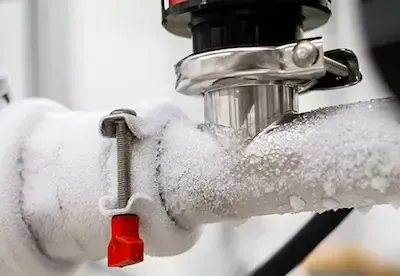
Freezing rarely happens all at once along an entire pipe run. It typically starts at the coldest point — usually near a vent opening, at an exterior foundation wall, or at a section where insulation has fallen away over the years. Once ice forms at that point, it acts as a plug. Water pressure builds behind the plug, and temperature continues to drop. The ice expands and pushes outward against the pipe wall. If a joint or a thin section can't hold, that's where the split occurs — sometimes several feet away from where the ice actually formed. This is why a plumber won't simply look at the obvious damage and declare the job done.
In crawlspaces specifically, the thaw phase carries its own danger. If the pipe has already split but the ice is still frozen, you won't see any water. The moment temperatures rise or a plumber applies controlled heat, the pressure releases and water flows freely — directly into your crawlspace, subfloor, and potentially into finished interior spaces above. Controlled, professional thawing is essential in this scenario.
Thawing Older Pipes Without Making Things Worse
Professional thawing of copper or aging PEX in a crawlspace is methodical work. A licensed plumber will first locate the frozen section by checking water pressure at fixtures and using experience with the home's layout. They'll also assess whether any splitting has already occurred before applying heat, because thawing a cracked pipe under pressure accelerates the leak.
Common thawing methods for crawlspace pipes include electric pipe thawing equipment, which sends a low-voltage current through the pipe to generate heat from within, and heat lamps or portable electric heaters positioned carefully near the frozen section. Open flame — including propane torches — is generally avoided in crawlspaces due to wood framing proximity and the real risk of fire inside a tight, hard-to-monitor space. For older copper, aggressive heat application can also damage solder joints even if the pipe itself survives the freeze.
The goal is a slow, controlled thaw that allows pressure to equalize gradually. Once water is flowing and the technician has confirmed no active leaks exist at the freeze point, a full inspection of the accessible crawlspace run follows to identify any additional weak spots that cold weather may have stressed.
Repair Options When a Pipe Has Already Split
When the damage is confirmed, repair approach depends on pipe material, access, and the extent of cracking. For copper, the standard repair involves cutting out the damaged section and soldering in a replacement run or using push-to-connect fittings where torch use is restricted. Push-to-connect fittings like SharkBite-style connections have become common in crawlspace repairs because they work reliably in tight spaces without requiring soldering in difficult positions.
For Frozen Pipe Repair in crawlspaces with a mix of old copper and newer PEX, a plumber may transition materials at the repair point, converting a damaged copper section to PEX for improved flexibility. This is especially practical when the damaged section runs through a particularly cold zone, since PEX handles temperature stress better over time in those locations.
If multiple sections show damage or signs of significant stress, the plumber may recommend a more comprehensive crawlspace re-pipe for the affected runs rather than patching each individual failure point. This is more disruptive upfront but avoids a cycle of annual repairs that adds up quickly.
Preventing the Next Freeze in an Older Crawlspace
Once repairs are complete, addressing the underlying vulnerability matters more than any single repair. For older Pickerington homes with vented crawlspaces, options include adding pipe insulation sleeves to all exposed supply runs, installing foam insulation along the interior of crawlspace walls to reduce cold air infiltration, and sealing exterior vents during the heating season. Some homeowners in Fairfield County pursue a full crawlspace encapsulation, which converts the vented crawlspace to a conditioned or semi-conditioned space and eliminates the freeze risk entirely for properly insulated interior pipes.
For practical seasonal steps before winter arrives, you can also review our cold snap prevention notes for specific actions that apply to Pickerington's climate patterns and the types of homes most commonly seen here.
Getting the Right Help for an Older Home
Crawlspace pipe repairs in older homes require more than speed — they require familiarity with aging materials, tight access conditions, and the interaction between thawing methods and fatigued plumbing. If you're dealing with a frozen line or have already discovered a split pipe beneath your Pickerington home, working with a plumber experienced in Fairfield County's older housing stock gives you a better outcome than a generalist approach. The pipe you save today with a careful repair is the one that doesn't cost you a subfloor replacement next February.
