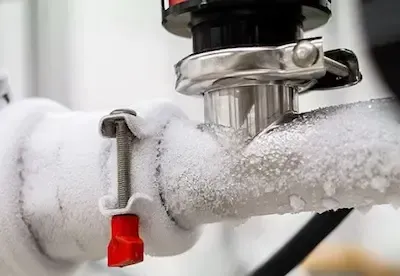
Outdoor Spigot Freeze Damage in Pickerington Homes
Most Pickerington homeowners think about their outdoor spigots exactly once a year — when they drag the garden hose out in spring. But by then, a freeze that happened in January or February may have already split the pipe inside your wall, and every day that passes without detection is another day water is quietly waiting to cause serious damage. Ohio winters do not need to be extreme to freeze a hose bib. A single overnight low in the mid-twenties, combined with wind and an uninsulated exterior wall, is enough to crack a fitting.
Why Outdoor Spigots Are Particularly Vulnerable
A standard hose bib is threaded directly into a pipe that runs through your exterior wall. That connection point sits in one of the coldest zones of your home — exposed on one side to outdoor air and, in many Pickerington homes built in the eighties and nineties, backed by a wall cavity with minimal insulation. When temperatures drop hard and fast, as they do across Fairfield County during February cold snaps, the water inside that short pipe section has nowhere to drain and no heat source to prevent freezing.
The pipe expands as the water inside turns to ice. If the spigot body itself does not fail first, the connecting pipe just inside the wall often does. This is the critical point most homeowners miss: the visible spigot on your exterior brick or siding may look completely intact, with no cracks and no ice. The damage is hiding inside the wall, and it stays hidden until you turn the water back on.
Frost-Free Spigots and Their Limits
Many newer Pickerington homes have frost-free hose bibs, which are designed with a longer stem that pushes the shutoff mechanism several inches inside the wall where it stays warmer. These are a genuine improvement over standard spigots, but they are not foolproof. A frost-free spigot only works correctly if the hose attached to it has been removed before freezing temperatures arrive. If a garden hose is left connected, water cannot drain back from the shutoff point, and the same freezing problem occurs — sometimes worse, because the failure point is deeper inside the wall.
If you were not sure whether your hose was disconnected before the last hard freeze, that is worth investigating now. For older crawlspace freeze context on how Pickerington's older homes handle cold air infiltration in below-grade spaces, the same principle applies: frost-free design requires proper usage habits to deliver its intended protection.
How to Identify a Burst Spigot Before Spring Arrives
The tricky part of hose bib freeze damage is that the leak is under pressure only when your water is on. During winter, when you are not using the spigot, everything feels fine. Here is what to watch for when temperatures start to climb and you are getting closer to outdoor water use:
- Water staining or damp drywall near an exterior wall, especially in a basement utility area or behind a first-floor wall adjacent to where your spigot is mounted
- A musty or mildew smell in a room with an exterior wall that houses a spigot
- Unexplained increases in your water bill after opening the spigot in spring
- Visible dripping or running water inside when someone turns the outdoor spigot on for the first time
- Low pressure or no flow at the hose bib even when the main supply is fully on
Pickerington sits in a part of central Ohio where freeze-thaw cycling is particularly common from late November through early March. That repeated cycling — freeze one night, partial thaw the next day — puts stress on fittings and solder joints that a single sustained freeze might not. Homes in neighborhoods like Liberty Farms and the newer developments off Hill Road see this pattern every winter.
What Happens When a Split Pipe Goes Undetected
If a cracked hose bib pipe goes unnoticed from winter into spring, the first time you turn on outdoor water the results can be dramatic. Water under full line pressure escaping inside a wall cavity will soak insulation, run down to the subfloor, and potentially damage finished spaces below. In a two-story home, a split on the first floor exterior wall can mean water finding its way to the basement. In a ranch-style home common in parts of Pickerington off Refugee Road, that water goes straight into the slab or crawlspace.
Mold growth is the secondary risk, and it develops faster than most people expect — within 24 to 48 hours in a warm, damp wall cavity. By the time you notice a visible stain or smell something off, remediation costs can exceed the original plumbing repair by several times over.
The Right Time to Have a Spigot Inspected
Late winter and early spring — before you reconnect hoses or attempt to use outdoor water — is the correct window for a hose bib inspection. A plumber can test the spigot under pressure, check for interior leakage, and assess whether the shutoff valve behind the wall (if your home has one) is still functioning properly. Older homes in Pickerington's established neighborhoods sometimes have a dedicated shutoff inside the basement or crawlspace for each exterior spigot. Finding and testing that valve is part of a complete inspection.
If your home does not have individual shutoff valves for outdoor spigots, adding them is a worthwhile upgrade. It gives you the ability to isolate and drain each hose bib before freeze season without shutting off water to the whole house.
Repair Options and Replacement Considerations
A split pipe just inside the wall typically requires opening the wall to access and replace the damaged section. This is not a repair that patches well from the outside. The spigot body itself may also need replacement if the freeze damage extended outward. When a plumber opens the wall, it is also a natural time to assess the insulation in that cavity and add it if it is absent — which in many Pickerington homes built before 1990, it is.
Upgrading to a frost-free spigot during repair is usually straightforward and adds meaningful protection for future winters. The labor is already being done, and the material cost difference is small. For a professional assessment and repair, Frozen Pipe Repair services are available locally and can address the full scope of freeze-related damage from the spigot to the interior pipe connection.
Protecting Outdoor Spigots Going Forward
Once your hose bibs are repaired or confirmed intact, a few habits will protect them through future Ohio winters. Disconnect hoses every fall before the first frost. If your home has interior shutoff valves for outdoor spigots, close them and open the exterior spigot briefly to let any remaining water drain out. Insulated spigot covers available at hardware stores add a layer of protection for standard hose bibs, though they are not a substitute for the steps above. In Pickerington's climate, these are not optional precautions — they are routine maintenance that prevents expensive repairs every few years.
