Spring Storm Sump Pump Failures in Pickerington Homes
April and May in Pickerington bring the kind of sustained, heavy rainfall that pushes residential sump pumps to their absolute limit. The Blacklick Creek watershed and the low-lying neighborhoods along Hill Road and Refugee Road are particularly vulnerable when back-to-back storm systems roll through Central Ohio. For many homeowners, the first sign of trouble is not a warning light or an odd noise — it is water creeping across a basement floor at two in the morning during a thunderstorm. Understanding why spring storms trigger so many sump pump failures, and what happens during a typical repair call, helps you respond faster and limit the damage.
Why Spring Storms Are the Hardest Test for Any Sump Pump
Ohio's spring storm season is not simply wet — it is relentless. A single April storm can drop two to three inches of rain in under four hours, and the clay-heavy soil common throughout Fairfield County does not absorb that volume quickly. Instead, water pools at foundation walls and enters the sump pit faster than a standard pump can cycle. When you add the possibility of a second storm arriving before the ground has dried, you have conditions that expose every weakness in an aging or undersized system.
The two most common failure points during high-volume events are thermal overload and float switch malfunction. When a pump runs nearly continuously for several hours, the motor overheats and trips an internal thermal cutoff. The pump stops, water rises, and the homeowner often does not realize there is a problem until it is already on the floor. Float switches fail for a different reason: debris, sediment, and mineral buildup accumulate in the pit over winter, and the spring thaw flushes that material in all at once. A float that worked perfectly in January may jam in the upright position or become too heavy to rise with the water level.
Aging Pumps and the Pickerington Replacement Cycle
The majority of homes in established Pickerington subdivisions — Violet Township corridors included — were built in the 1990s and early 2000s. That means a significant number of original sump pumps are well past their typical seven-to-ten-year service life. A pump that is twelve or fifteen years old may still run when tested on a dry day but cannot sustain the duty cycle demanded by a spring storm. Homeowners often discover this the hard way when the first major April rain arrives.
Signs that an aging pump is at risk going into storm season include unusually long run times during light rain, a grinding or rattling noise during operation, water that does not fully evacuate before the next cycle begins, and visible corrosion on the pump body or discharge connections. If your pump is showing any of these behaviors before May, it is worth having a technician evaluate it rather than waiting for a failure during a storm.
What a Same-Day Repair Call Typically Covers
When you call for Sump Pump Repair during or immediately after a storm event, the technician's first priority is stopping active water intrusion. That means assessing whether the existing pump can be restored quickly or needs to be replaced on the spot. Most experienced technicians carry a range of pump sizes on their service vehicles because spring emergency calls in Fairfield County almost always require immediate installation rather than a scheduled follow-up.
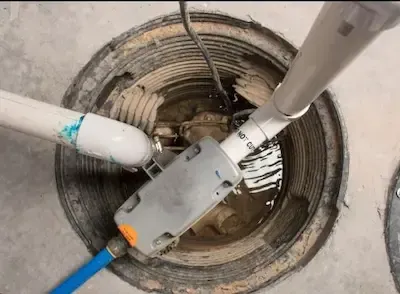
A typical same-day call includes inspecting the pit for debris obstruction, testing the float switch through its full range of motion, checking discharge line integrity all the way to the exterior outlet, and verifying that the check valve is seating properly. The check valve is a small but critical component — if it fails, water that was pumped out simply flows back into the pit, forcing the pump to run again almost immediately. During storm season, a failed check valve can run a motor to burnout within hours.
Discharge line routing also comes under scrutiny on spring calls. Pickerington building guidelines require discharge to terminate well away from the foundation, and over time, freeze-thaw cycles can crack or disconnect sections of that exterior line. A pump working perfectly inside the home can flood a basement if its discharge is blocked or dumping water back toward the foundation.
Power Outages Add a Second Layer of Risk
Spring thunderstorms in central Ohio regularly knock out power across Pickerington and Violet Township. A sump pump that cannot run because the lights are out is just as useless as one with a burned motor. This is the scenario where backup power becomes the difference between a dry basement and a significant water loss event. If you have not already reviewed our battery backup setup notes, it is worth reading through before storm season peaks — particularly for homes in areas that see repeated outages during severe weather.
Battery backup units and water-powered backup pumps each have distinct advantages depending on your water pressure and the typical duration of outages in your area. A technician doing a spring repair call can advise on which option makes sense for your specific setup, since homes in lower-elevation sections of Pickerington face longer inundation windows if the primary pump is out of service for more than thirty to sixty minutes during a heavy event.
Reducing Your Risk Before the Next Storm Arrives
There are practical steps you can take now to lower your exposure during the remainder of spring storm season. First, test your pump manually by pouring a bucket of water into the pit and watching the float trigger the pump. If the pump is slow to start, slow to clear the water, or makes unusual sounds, that test alone gives you useful information. Second, check the exterior discharge outlet and clear any debris that accumulated over winter. A blocked outlet is one of the most preventable causes of spring pump failure. Third, confirm your pump is plugged into a GFCI-protected outlet and that the outlet is functioning — a tripped GFCI looks identical to a powered outlet until you test it.
Homes in the Pickerington area that have experienced basement flooding in previous springs should also consider having a licensed plumber assess the overall drainage strategy around the foundation, not just the pump itself. Sometimes a persistent water problem reflects grading issues or clogged window well drains that the sump system is simply compensating for — and there are limits to how much any pump can compensate before it fails.
